Your Structured Winter Cycling Plan for Peak Performance
Make the most of your off-season with a structured winter cycling plan designed to boost your performance when it counts. Embrace the cooler months by staying active and focused, ensuring you build strength and stamina for the upcoming cycling season. With a little planning and dedication, you can transform this winter into a productive training period that sets you up for success. Let’s pedal through the winter together Your Structured Winter Cycling Plan for Peak Performanc.
The cycling off-season is not a time for neglect; it is where the successful athlete is truly made. Successful cyclists utilize this period, typically spanning early fall through winter, for targeted recovery and meticulous preparation for the upcoming racing calendar. Maximizing this crucial time requires implementing a comprehensive, phase-based Structured Winter Cycling Plan. This roadmap ensures you return to the bike refreshed, stronger, and ready to achieve new performance goals.
Phase 1: The Essential Unloading and Recovery
Immediately following the final goal event or heaviest racing block, athletes must focus on recovery and reducing total body stress, both physical and mental. This period should be a rejuvenating time for the athlete holistically.
Defining the Break
The off-season period is defined as the time when athletes purposely cease structured training and racing.
• Minimum Break: One week is the minimum time recommended away from the bike.
• Longer Break: Athletes who had an extensive season (e.g., racing January through August) may require 2 to 4 weeks off the bike.
• Competitive Cyclists: Competitive cyclists are often advised to use a typically wet and cold month, such as November, for this regeneration break.
• No Maintenance Required: There is little efficacy or real benefit in attempting to maintain current peak fitness during this period. The training year requires an “unloading” phase, similar to how each training month incorporates a week of decreased stimulus.
Mental and Physical Renewal
Utilize the abundance of free time to catch up on personal life or work, spend time with friends and family, or simply read.
Activity Status
Recommendation
Purpose
Training/Racing
Cease structured training and high-intensity intervals.
Prevents overtraining, burnout, and allows for psychological rest.
Activity Level
Stay active if desired, especially for athletes training 5-10 hours per week who need a mental break.
Maintains motivation while avoiding high-intensity stress.
Riding
Keep riding unstructured, easy, and fun (e.g., riding to a coffee shop or around the neighborhood).
Reminds the athlete why they enjoy riding.
Phase 2: Analysis, Assessment, and Goal Setting
Once the initial rest is complete, the focus shifts to preparation. The off-season provides a major opportunity to lay the foundation for a successful season. Implementing a Structured Winter Cycling Plan must start with an objective review.
Season Review and Deficit Elimination
Look back at the previous season to identifypossible deficits and weaknesses. This analysis is crucial for drawing up a targeted training plan, possibly with professional guidance.
1. Addressing Limiters: The off-season is the most feasible time to work on limiters that were difficult to address during the intense racing season.
2. Injury Management: Chronic issues like nagging injuries, mobility discrepancies, inflammation (Tendonitis), or signs of overtraining syndrome (OTS) must receive adequate recovery and potentially rehabilitation. Addressing these concerns now prevents extensive time off leading up to priority events.
Testing and Goal Identification
Testing establishes fitness baselines and monitors progress, while goal setting provides the necessary motivation and direction.
• Fitness Determination: Determine the athlete’s current level of fitness through testing. This helps prevent permanent overloads during training.
• Testing Methods: Regular repetition of tests, such as determining personal FTP (Functional Threshold Power), allows for monitoring progress. Metabolic cart testing removes environmental ambiguity and provides specific metabolic efficiency markers, such as the Respiratory Exchange Ratio (RER) and VO2/VCO2 ratio, proving improvement to the athlete.
• Setting Clear Goals: Athletes should set clear objectives for the upcoming season. A mix of goal types is recommended (Leith, 2003):
◦ Outcome Goals: Focus on the result (e.g., winning a specific race).
◦ Performance Goals: Focus on a quantifiable measure (e.g., completing a 40K time trial in a specific time).
◦ Process Goals: Focus on the method or task (e.g., improving warm-up strategy or race approach).
Phase 3: Building the Physiological Profile
The subsequent training period should involve varied, systematic training targeted toward fitness basics. A well-executed Structured Winter Cycling Plan systematically improves endurance, speed, strength, and coordination.
Cycling Fitness Basics and Training Types
Fitness Basic
Definition/Purpose
Key Training Variations
Endurance
The basis for high performance; cycling primarily requires long-term, aerobic endurance (energy production with O₂).
Indoor cycling workouts on a cycle trainer, running, swimming, or “short” laps on cyclocross or gravel bikes.
Speed
Essential for rapid acceleration and short cyclic impulses. Improves muscle fiber control and trains the central nervous system.
Sprints on the cycletrainer or free roller, plyometric training, or training with fitness accessories.
Strength
Needed for explosive maximum power and power endurance (maintaining strength over time, e.g., on climbs). Crucial for eliminating deficits and preventing injury.
K3 training (low speed, high gear), gym work (squats, leg press), or bodyweight training.
Coordination
The basis of all movements; allows for the targeted and efficient use of strength, speed, and endurance.
Reflex training using a Pezzi ball or balance board, bouldering, or yoga.
Detailed Focus Areas for the Structured Winter Cycling Plan
Endurance Focus (LIT)n
Since long-termendurance is paramount in cycling, extensive training should be conducted in the aerobic range. Basic Endurance Training (LIT – Low Intensity Training) involves holistic loading at only 60–80% of the maximum pulse for a period of at least 45 minutes. This low-intensity work can be accomplished indoors or outdoors.
Strength Training Strategy
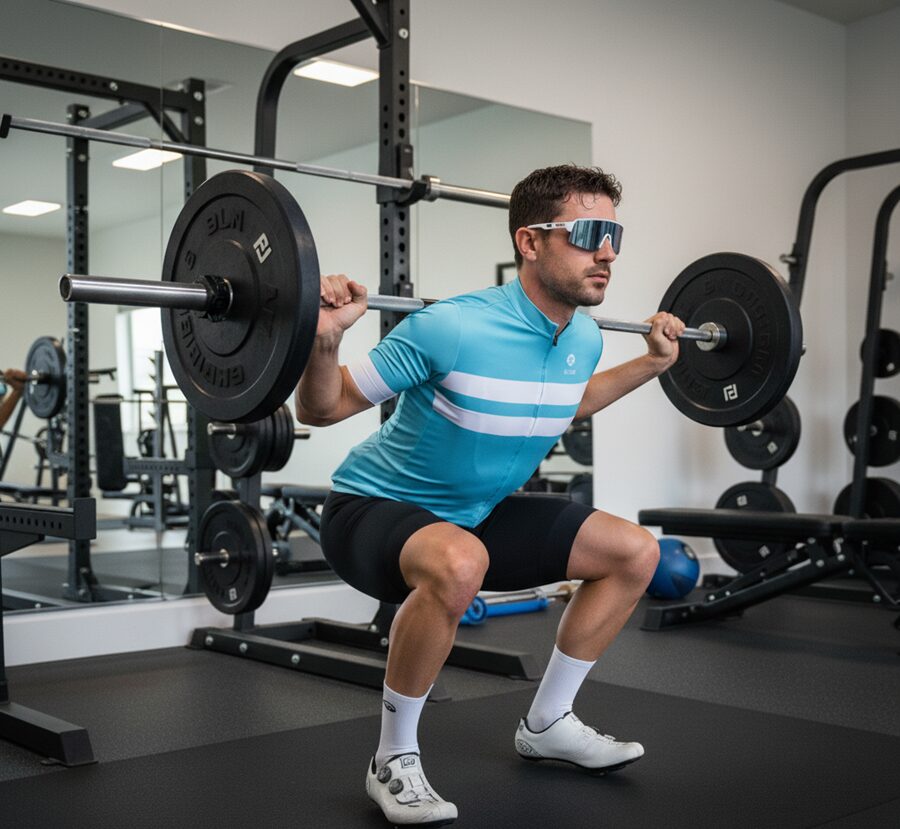
Targeted strength training should address muscle groups essential for cycling, particularly the leg and gluteal muscles (quadriceps, knee flexors/extensors, large gluteal muscle, calf/shin muscles). Road cyclists require static support strength in the triceps, and stabilizing neck and shoulder muscles. Mountain bikers require dynamic strength in the entire body, including biceps, upper back, abdominal muscles, and lower back, to react dynamically to trail conditions and jumps.
• Primary/Bike-Specific Strength: Utilize power intervals on the trainer (K3 training) or maximal strength exercises in the gym (leg press, deadlifts, squats). Squat and lunge variations can be done at home.
• General Strength: Incorporate basic strength exercises (bench press, rowing, pull-ups) or bodyweight training.
Phase 4: Strategic Implementation and Cross-Training
To maintain motivation and build strength in neglected areas, the Structured Winter Cycling Plan should be highly varied.
Cross-Training for Cyclists
Cross-training is advantageous, particularly in the first 8–12 weeks after the season, to build strength in other areas before cycling-specific intensity increases. Correctly implemented cross-training prevents bone mass loss and joint arthrosis in areas hardly used while cycling.
Cross-Training Activity
Primary Benefits
Yoga
Improves flexibility and mobility.
Climbing/Bouldering
Builds general strength, coordination, and offers mental variety.
Functional Fitness/Circuit Training
Excellent way to build strength while maintaining an aerobic component.
Running/Swimming/Skiing
Builds basic endurance through non-cycling modalities.
Table Tennis
Helps maintain reaction speed.
Skill and Technique Development
Use training rides as a time to improve specific race skills and technique. This builds confidence in tight racing situations.
• Race Skills: Practice water bottle grabs, bump drills, and tire rubbing.
• Technique Observation: Team or coach-led training rides are excellent opportunities to identify and correct subtle discrepancies in technique that raw ride data may not reveal.
The Role of Indoor Training
Indoor training, utilizing a smart cycletrainer, is highly recommended during the winter months. It allows for specific training control, increased reliability, and independence from weather and time constraints.
• Equipment Foundation: Optimal basic indoor equipment includes a direct drive cycle trainer, a yoga mat, kettlebells, a set of sling trainers, and a balance board.
• Smart Trainers and Apps: Smart trainers (especially direct-drive versions for reduced noise) are highly motivating. Training platforms (apps) that provide virtual routes and targeted training control, like Zwift, make the workouts more effective and entertaining.
Phase 5: Consistency and Monitoring
The Structured Winter Cycling Plan must be integrated into the daily routine with fixed, regular appointments to ensure consistent execution.
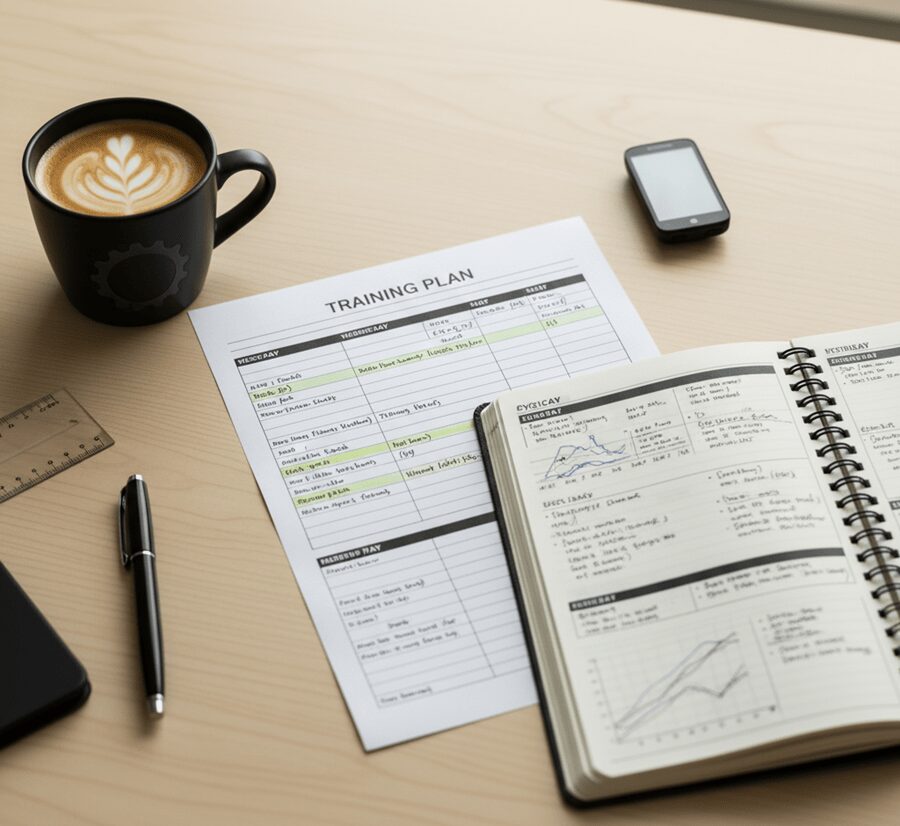
Creating the Training Plan
A training plan is an ideal tool for systematically building fitness or strength. It adapts exercises and frequency to specific goals, provides instructions on duration and repetitions, and serves to record progress. The exact plan depends on individual goals, but a structured winter cycling plan ensures comprehensive development throughout the colder months.
This exemplary schedule illustrates how strength, speed, coordination, and endurance fit into a StructuredWinter Cycling Plan.
Day
Training Focus
Sport/Training Type
Duration
Training Day 1 (Start of Week)
Strength/Speed
Bike-Specific Intervals (Roller trainer), or General Strength (Gym/Bodyweight/Sling trainer).
Virturally supported training on the cycle trainer, home trails (MTB/road bike), running, or cross-country skiing.
Minimum 45 minutes
Day 6 & 7
Rest Days
Focus on active recovery or easy, unstructured activity.
N/A
Monitoring for Success
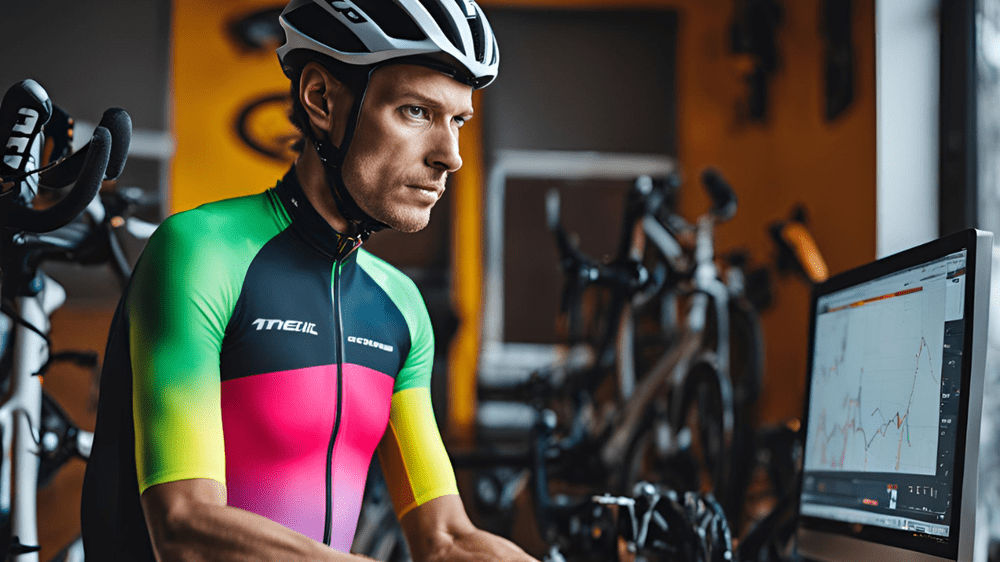
Monitoring training and the body is critical for systematic training and recognizing negative tendencies early. Smart accessories are essential tools for this purpose.
• Tools: Smart sports watches,heart rate measurements, bike computers, and watt meters play a major role in monitoring progress and performance.
• Progressive Loading: The amount of strength and endurance training should increase as the season approaches. The fundamental principle is progression in a steady and progressive manner.
• Regeneration: Ensure you schedule regular training breaksfor effective regeneration, as this is crucial for improving performance.
A successful off-season, guided by a focused and varied Structured Winter Cycling Plan, provides the necessary recovery and physiological foundation to achieve maximum performance once the main racing season arrives.
——————————————————————————–
Off-Season Gear Selection
To effectively execute your Structured Winter Cycling Plan, specific equipment can enhance training effectiveness and consistency.
1.Direct Drive Cycletrainer (e.g., Wahoo KICKR Core)These trainers offer specific training control, are typically much quieter than wheel-on trainers, and increase the reliability of implementing specific workouts regardless of external factors. Refine your indoor interval work by investing in consistent power measurement.
2. Indoor Bike Shoes (e.g., Shimano SH-IC501)Dedicated indoor cycling shoes provide optimal comfort, ventilation, and stiffness for sustained efforts on the cycle trainer or spinning bike. Maximize your pedal stroke efficiency with specialized indoor footwear.
3. GPS Running Watch (e.g., Garmin Forerunner 255)This accessory allows athletes to monitor their training and body, recognize tendencies early, and manage cross-training activities like running or swimming. Monitor your progress and recovery metrics across all training modalities.
4. Yoga Mat and Balance Board (Fitness Accessories)These items are essential basic equipment for coordination, mobility, and bodyweight strength training. Regular yoga and core work are crucial to addressing deficits and improving flexibility. Enhance your core stability and flexibility, key factors for maximizing performance on the bike.
We are an Amazon affiliate and earn from qualified Amazon purchases with no cost to you. This is for ANY product that you purchase through our links.
If you enjoyed learning about this week’s featured bicycle, don’t miss out on more classic bike goodness! Visit our website atclassicjapanesebicycles.com for an extensive collection of timeless Japanese bikes and their unique stories. Plus, check out our YouTube channel,Bicycle Restoration Man, for detailed restoration videos and showcases of our finished projects. Subscribe and join our community of bike enthusiasts!