

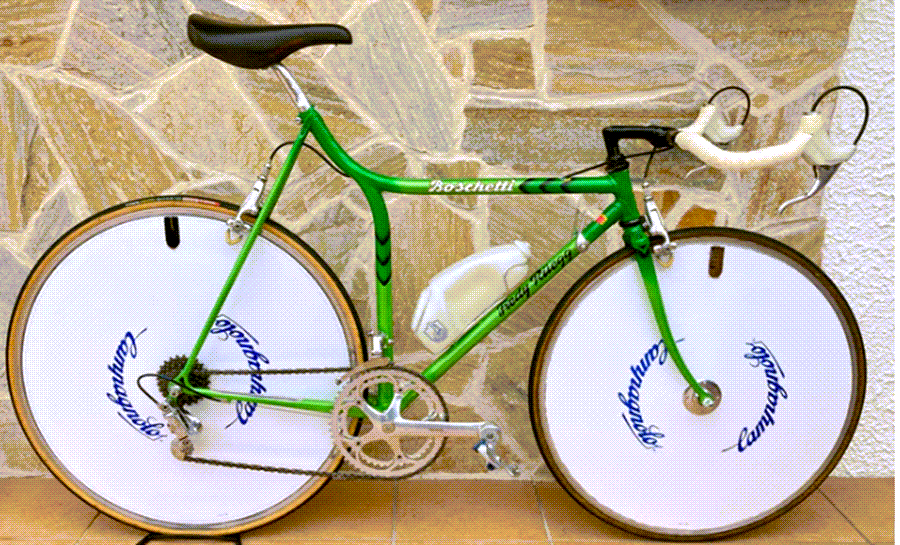
Rino Boschetti Crono
Quick Answer
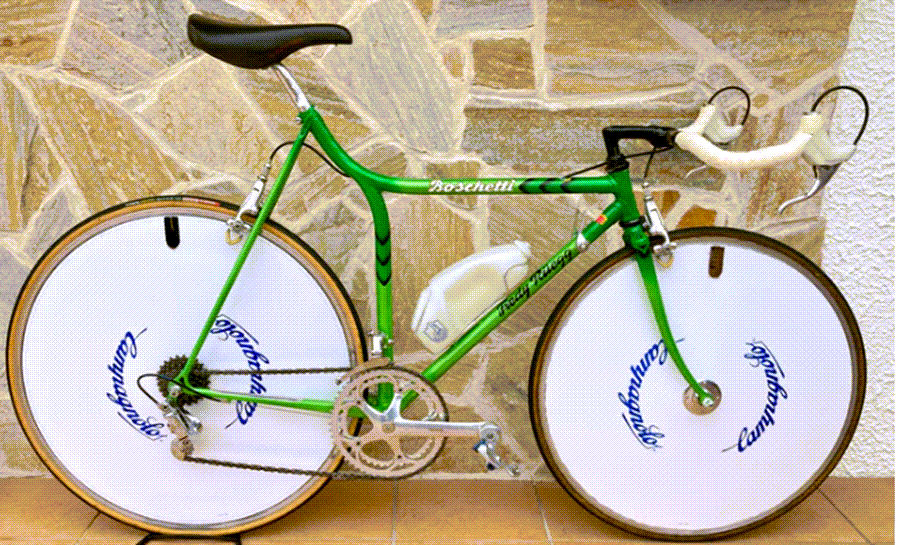
The Rino Boschetti Crono Lo Pro is a rare, hand-built Italian lo pro pursuit/time trial bicycle from the 1980s, constructed on Columbus Cromor steel tubing in a 58cm (center-to-top) frame. It is equipped with a full Campagnolo C Record groupset and runs a mixed-wheel configuration — 700c rear disc, 650c front disc — consistent with the “va por la hora” hour-record geometry of the era. Only one example exists in this green paint scheme. It is listed at €5,000 through Mastroianni Classic Bikes.
Frame and Tubing
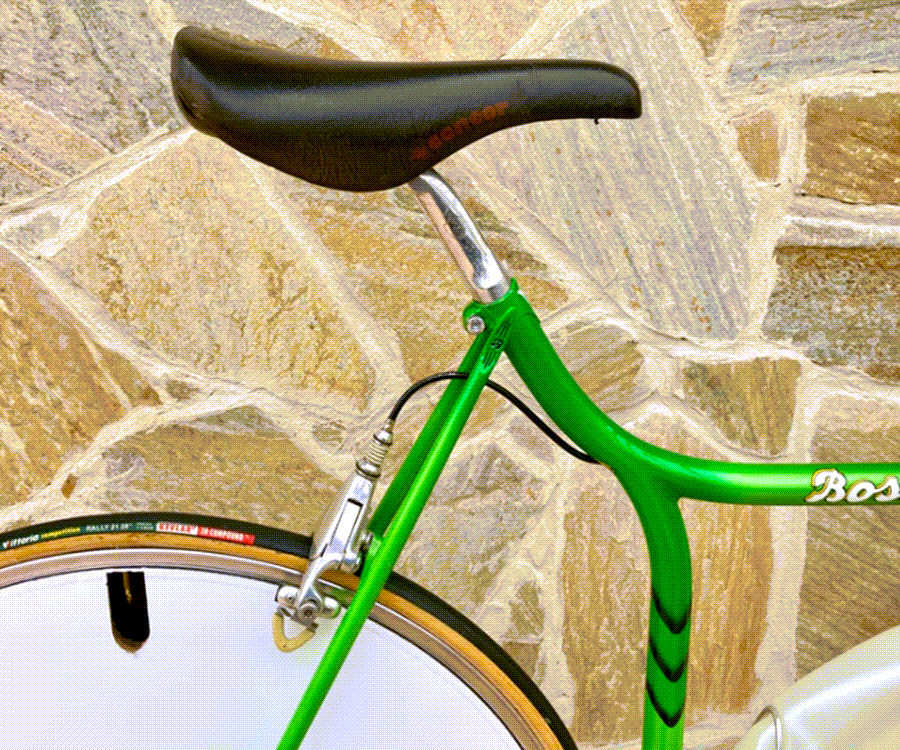
Rino Boschetti was a small-scale Italian framebuilder working during the peak period of Italian handmade steel bicycle production. The Crono Lo Pro frame is built from Columbus Cromor tubing — a Chrome-Molybdenum alloy (25CrMo4 grade) developed by Columbus of Milan. Cromor occupies the mid-to-high tier of the Columbus catalog, positioned below SL and SLX in terms of wall thinness and overall weight, but well above plain-gauge steel. The tubing is butted at each end, which reduces material at lower-stress zones while retaining wall thickness at the joints where forces concentrate.
|
The frame geometry follows the lo pro (low profile) configuration that rose to prominence after Francesco Moser’s 1984 hour record. Defining characteristics include a steeply angled fork, a dramatically shortened head tube, and a steeply sloped top tube that compresses the rider’s frontal profile. The result is a measurably lower aerodynamic cross-section compared to conventional road geometry. The 58cm center-to-top measurement typically fits riders in the 180–186cm height range, depending on inseam and positional preference.
Drivetrain: Campagnolo C Record
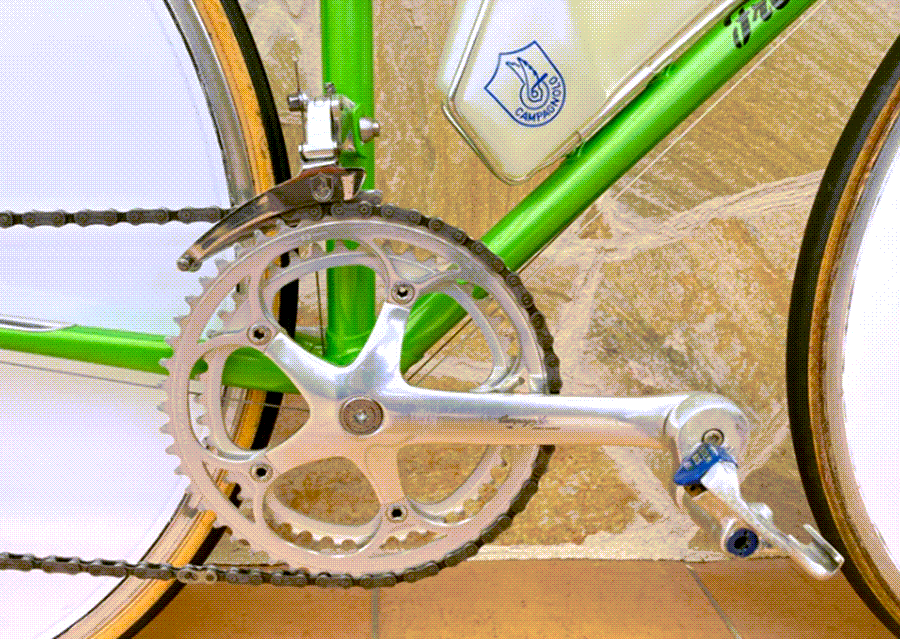
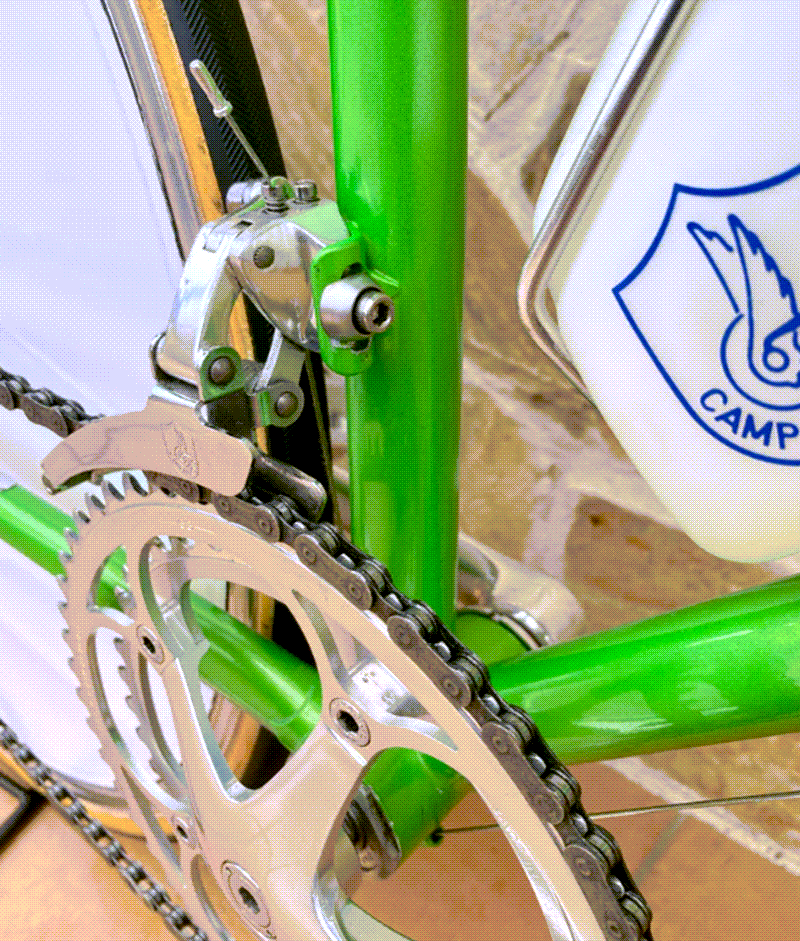
The complete groupset is Campagnolo C Record, the top-tier component group Campagnolo produced from the mid-1980s onward. C Record succeeded Super Record and represented the apex of Italian component engineering at the time. The crankset runs 180mm crank arms — longer than the standard 170–172.5mm range — favoring riders with longer femurs or those who produce more torque at lower cadence during time trial efforts. Chainring configuration is 53/44, a period-correct TT combination providing range suited to both pursuit and road TT courses.
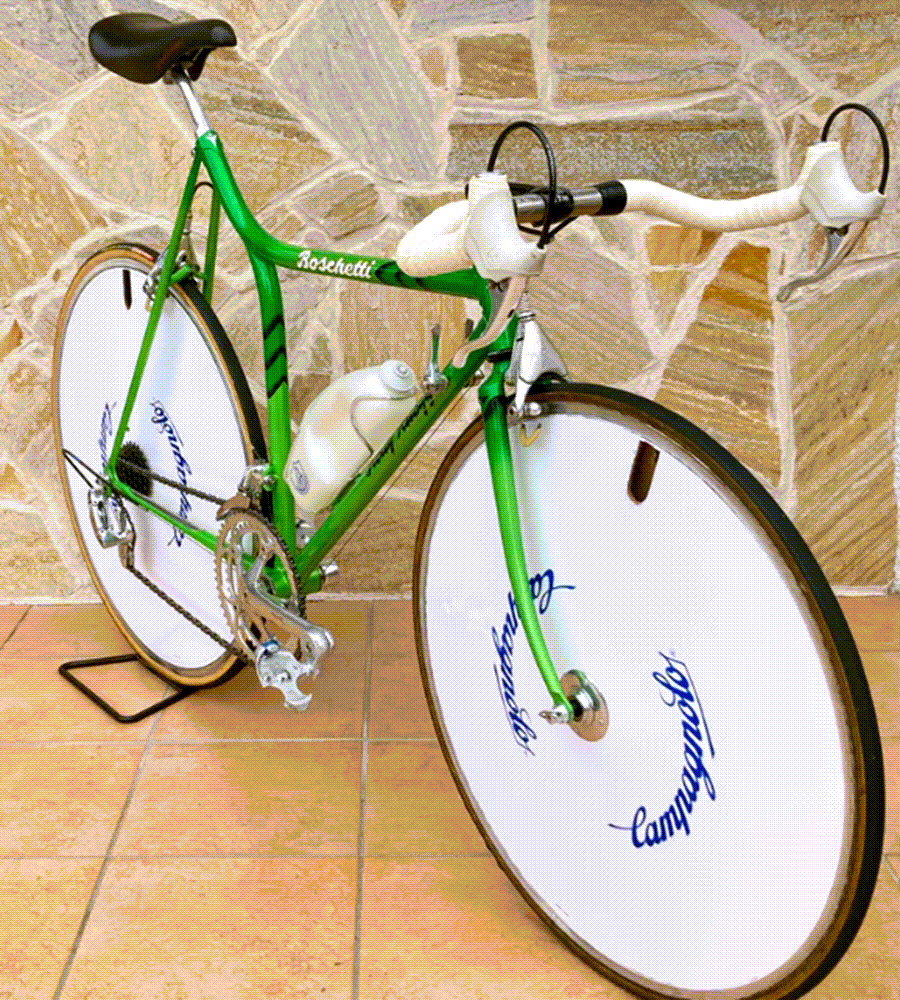
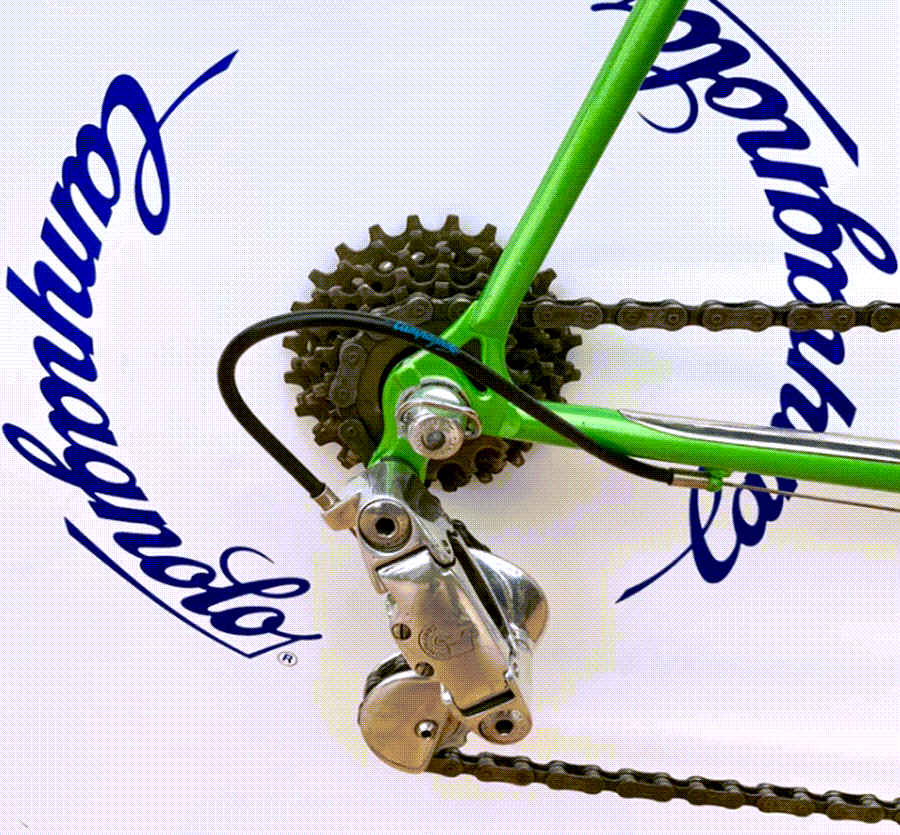
The rear derailleur and front derailleur are both C Record, paired with a 6-speed Caimi Everest freewheel. Caimi was an Italian manufacturer whose freewheels were used on competition builds throughout the 1980s. Shifting is via C Record downtube friction shifters — the standard interface for this drivetrain generation. The bottom bracket is Campagnolo.
Braking System
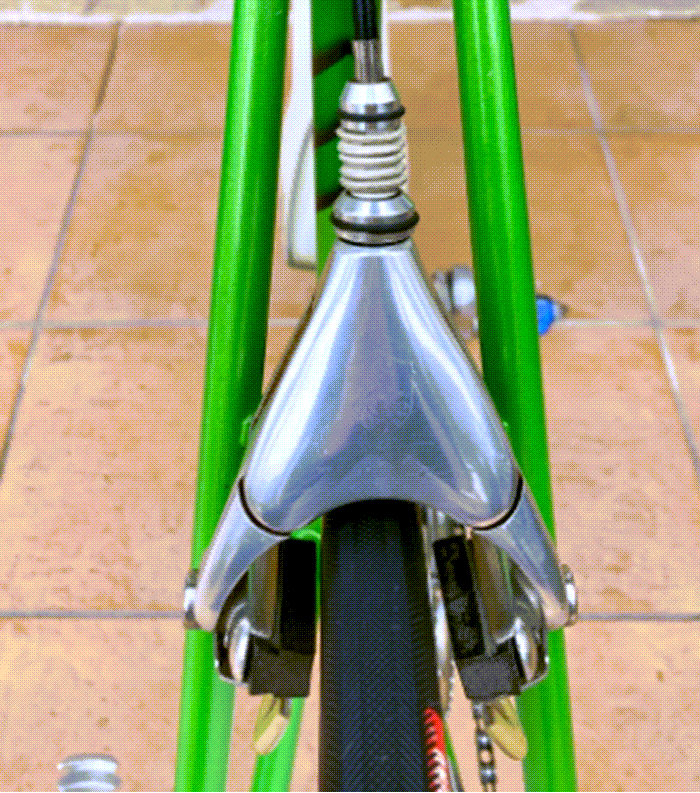
The Campagnolo C Record Delta brakes are the most mechanically complex component on this build. Delta brakes use an internal parallelogram linkage rather than a conventional single-pivot caliper. The mechanism is designed to equalize pad travel on both sides simultaneously, theoretically producing more even contact with the braking surface. In practice, Delta brakes are notorious for difficult setup and maintenance, which ultimately led Campagnolo to discontinue them. Paired with C Record brake levers, they are period-accurate and among the most sought-after components by Italian racing bicycle collectors.
Cockpit and Contact Points
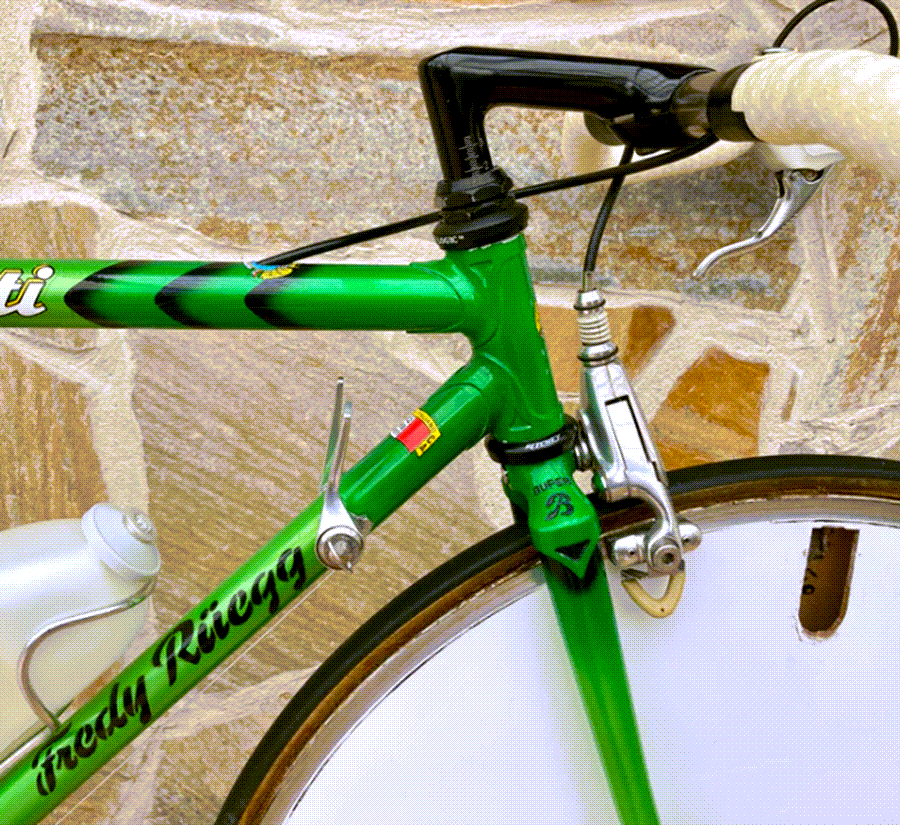
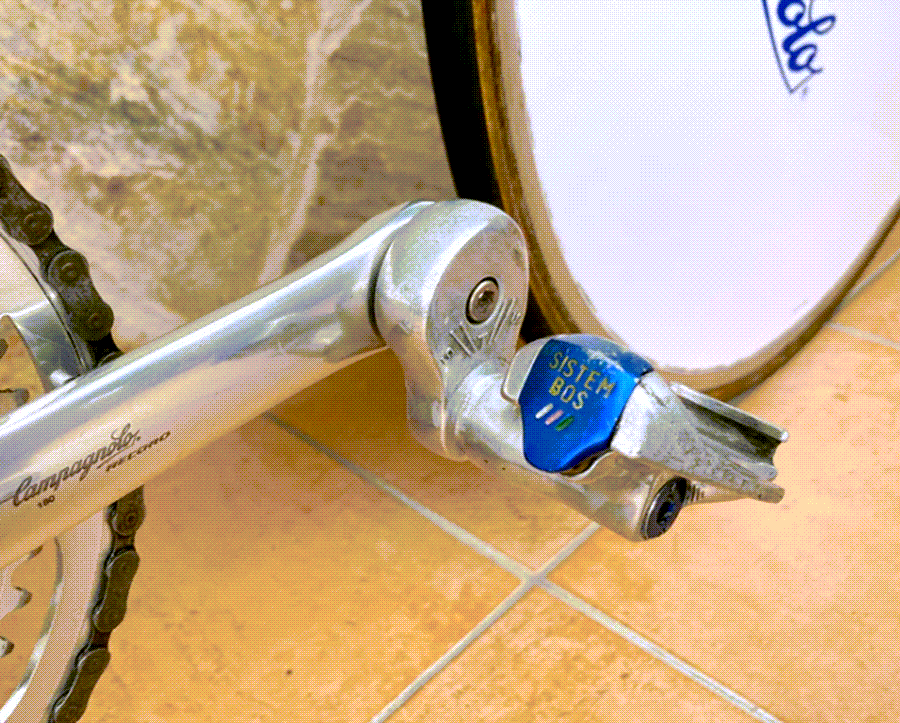
The handlebar is a 3TTT Moscow, a drop bar with a shallow drop and short reach optimized for the low, forward position required by lo pro geometry. The stem is ITM. The headset is a Ritchey Logic — American-made, and the one non-Italian component in an otherwise domestic build, indicating a pragmatic substitution. The seatpost is C Record; the saddle is a Selle San Marco Concor, a flat-profiled racing saddle ubiquitous on Italian competition bikes of the 1980s. Pedals are Sistem Bos, a less widely distributed Italian clipless system from the era.
Sponsored · Competitive Cyclist
Wheel Configuration
The wheel setup is mixed by design: a Campagnolo Khamsin rear disc in 700c and a Campagnolo Khamsin front disc in 650c. This configuration was standard on lo pro pursuit frames of the period. The 650c front wheel enables the top tube to slope more steeply downward without raising the bottom bracket or compromising standover clearance. The 700c rear maintains standard rollout and maximum disc surface area for aerodynamic effect. Tires are period tubulars: Vittoria Corsa CX Squadre Prof (700c rear) and Vittoria Competition Rally (650c front).
Collector Context
The Rino Boschetti Crono Lo Pro represents a well-documented, single-production-example of Italian lo pro framebuilding from the decade when this geometry defined elite pursuit and TT racing. Complete C Record builds in original, unmodified condition are increasingly scarce. The unique factory green paint, mixed-disc wheel configuration, and full component originality distinguish this from more commonly available Italian race bikes of the same period. At €5,000, the price reflects both the full C Record groupset value and the rarity of a Boschetti frame in rideable, complete condition.
Frequently Asked Questions
What does “lo pro” mean on a vintage Italian bicycle? “Lo pro” (low profile) describes a frame geometry engineered for time trial and pursuit racing. It uses a steeply sloped top tube, shortened head tube, and steep fork rake to position the rider lower and more compactly than conventional road geometry, reducing aerodynamic drag on flat, sustained-power courses.
Why does the Rino Boschetti Crono Lo Pro use a 650c front wheel and 700c rear wheel? The mixed-wheel setup is a deliberate geometric and aerodynamic choice. The smaller 650c front wheel allows the fork and frame’s top tube junction to sit lower without raising the bottom bracket, enabling the characteristically sloped lo pro profile. The 700c rear disc maintains standard rollout and maximizes the rear disc’s aerodynamic surface area.
What is Columbus Cromor tubing? Columbus Cromor is a butted chromoly steel (25CrMo4 alloy) tubing produced by Columbus of Milan. It sits in the mid-to-high tier of the Columbus range — lighter and thinner-walled than plain-gauge steel, but below the premium SL and SLX grades in overall weight. It was widely used in Italian handbuilt race frames throughout the 1980s.
James Hickman is a former USA Cycling Expert-level coach who has worked with cyclists at every level, from beginners to competitive racers. He served as a coach for the Leukemia & Lymphoma Society’s Team In Training program, helping riders prepare for and complete century events. A Masters-category racer himself, he competed and earned podium finishes in Southern California events and holds a Platinum finish at El Tour de Tucson, completing the 100 miles+ in under five hours.
RECOMMENDED PRODUCTS
 The Pro Travel Pedal Wrench makes quick work of tough pedals and now doubles as a socket driver for use with Pedro’s professional socket tools. The Pro Travel Pedal Wrench makes quick work of tough pedals and now doubles as a socket driver for use with Pedro’s professional socket tools. |
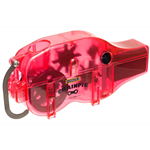 The Pedro’s Chain Pig II Chain Cleaner uses pro-grade brushes and an absorbent sponge that removes grime, dirt, and oil from your chain, so you can ride with less gunk clogging your drivetrain. The Pedro’s Chain Pig II Chain Cleaner uses pro-grade brushes and an absorbent sponge that removes grime, dirt, and oil from your chain, so you can ride with less gunk clogging your drivetrain. |
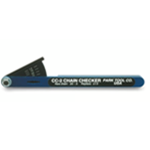 Park Tool CC-2 Chain Checker. Chain wear directly impacts shifting performance and accelerates drivetrain damage. Beyond 0.5% elongation, worn chains damage cassette cogs and chainrings through improper engagement.
|
We are an Amazon affiliate and earn from qualified Amazon purchases with no cost to you. This is for ANY product that you purchase through our links. We are also an affiliate for Competitive Cyclist and JensonUSA. This way we can provide you with competitive pricing and products.