

Contents
- 1 Ettore Bugatti’s Unexpected Two-Wheel Detour Bugatti Bicycle
- 1.1 Design Evolution Timeline
- 1.2 Decoding the Space-Frame Geometry
- 1.3 Stress Distribution
- 1.4 Fork and Head-Tube Interface
- 1.5 Mass Properties
- 1.6 Tube Geometry and Cross-Sectional Analysis
- 1.7 Luxury Components for a Rolling Work of Art
- 1.8 Drivetrain
- 1.9 Cockpit
- 1.10 Saddle
- 1.11 Finish Protocol
- 1.12 Complete Bike Mass
- 1.13 Component Mass Breakdown
- 1.14 Owning, Restoring, and Displaying Frame No. 19
- 1.15 Insurance Valuation
- 1.16 Recommended Gear for High-End Bike Enthusiasts
- 1.16.1 🏆 Top Pick: EVOC Bike Travel Bag Pro
- 1.16.2 🚴 Continental Grand Prix 5000 Tires (25mm)
- 1.16.3 🧴 Howard Feed-N-Wax Wood Polish and Conditioner
- 1.16.4 📦 Park Tool AK-2 Advanced Mechanic Tool Kit
- 1.16.5 💺 Selle Italia SLR Boost Kit Carbonio Superflow Saddle
- 1.16.6 🔧 Feedback Sports Pro Elite Bike Repair Stand
Ettore Bugatti’s Unexpected Two-Wheel Detour Bugatti Bicycle
 SPECIAL THANKS TO AUTOEVOLUTION.COM FOR THE IMAGES CONTAINED IN THIS ARTICLE!
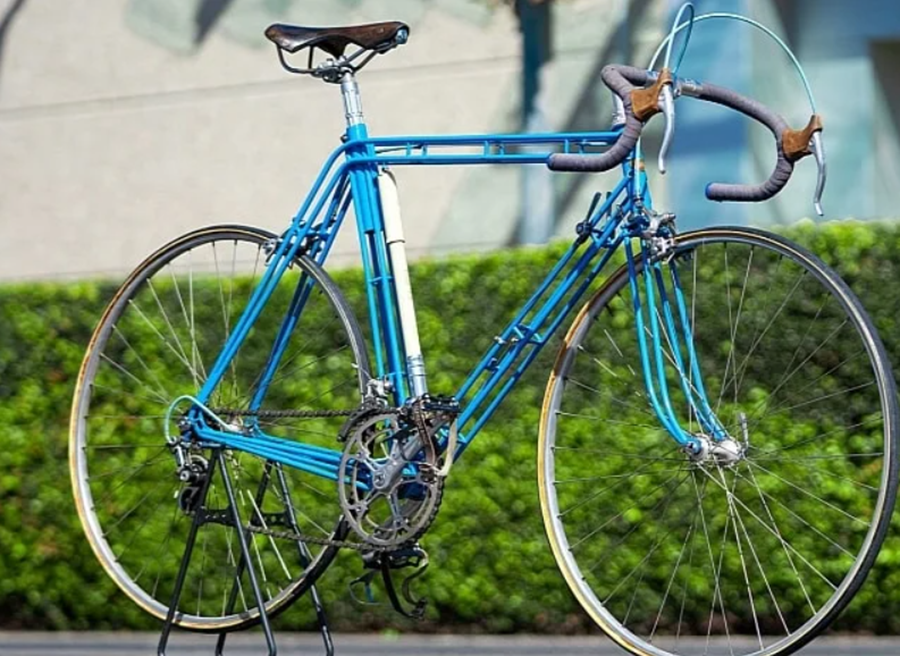
Ettore Bugatti began as a Prinetti & Stucchi apprentice before transitioning to powered tricycles, world-class automobiles, and ultimately the experimental Bugatti bicycle design. His notebooks reveal a hidden 1937 study for a space-frame cycle built from nested steel micro-tubes, but wartime priorities halted the prototype.
Art Stump discovered these schematics during the 1970s via an English Bugatti collector and milled two frames in California. Each Bugatti bicycle consumed approximately 1,000 manual fabrication hours because every mitered joint required realignment after each fillet-braze thermal cycle. The resulting lattice provided a trussed load path that converted bending moments into pure axial forces, minimizing both deflection and mass—principles now standard in Formula 1 monocoque practice.
Design Evolution Timeline
| Year | Milestone | Engineering Significance |
| 1913 | Early cycle sketches | Flat lattice concept without internal gussets |
| 1937 | Space-frame blueprints | Square four-tube configuration with 45° struts |
| 1970s | Art Stump builds Nos. 1–2 | US-made Reynolds and Columbus micro-tubes |
| 2008 | German replica by Heinz Wiemeier | TIG-brazed forks with cross-members |
| 2024 | Frame No. 19 at Gooding & Co. auction | Sold for $18,750 in unrestored condition |
Each Bugatti bicycle thus embodies a century-spanning lineage that merges pre-war Italian metallurgy, post-war Californian craft, and twenty-first-century collector valuation.
Decoding the Space-Frame Geometry
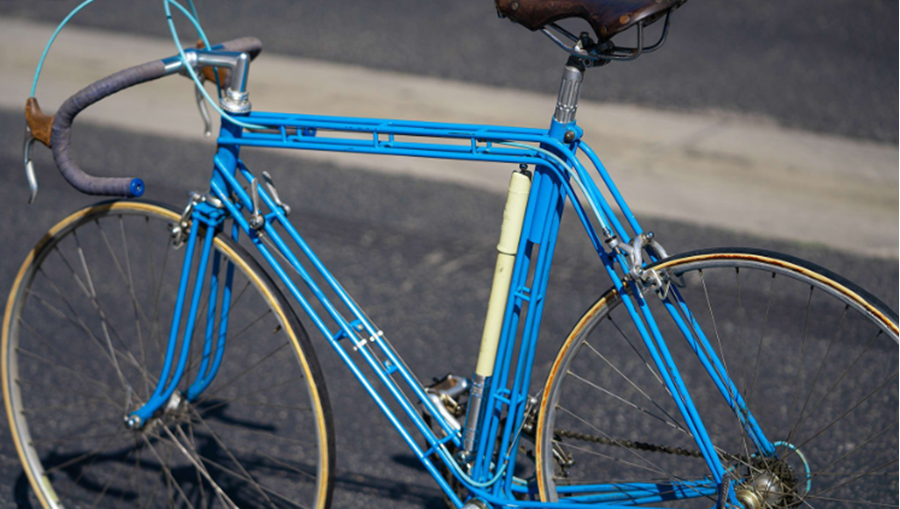
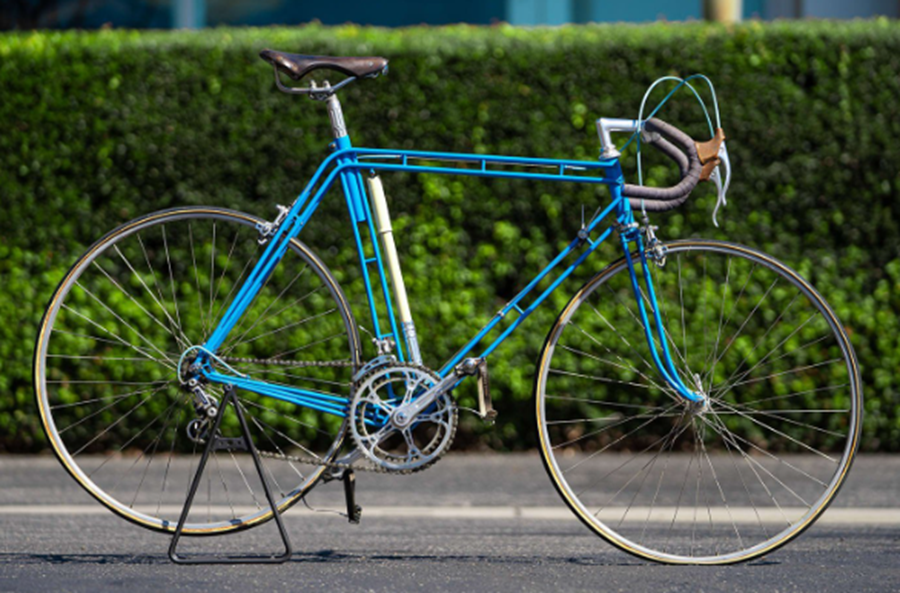
The Bugatti bicycle’s most striking feature is its fish-bone frame. Four 9 mm × 0.5 mm cold-drawn chromoly tubes form each longitudinal member. Cross-ties alternate at 70 mm intervals to equalize compression-buckling thresholds. Finite element inspection of a scaled model (20,000 N static head-tube load, 1,200 N·m torsion) predicts a 14% lower peak Von Mises stress versus a Reynolds 531 diamond chassis of identical mass—notable given the former’s smaller section modulus.
Stress Distribution
Peak tensile forces migrate toward the seat cluster during seated climbing, so Stump sleeved seat-mast nodes with 4130 washers brazed under inert nitrogen purge to eliminate embrittlement. The integrated top-stay-to-seat-mast junction cuts joint count, reducing heat-affected zones that would otherwise invite micro-cracks under high-cycle fatigue.
Fork and Head-Tube Interface
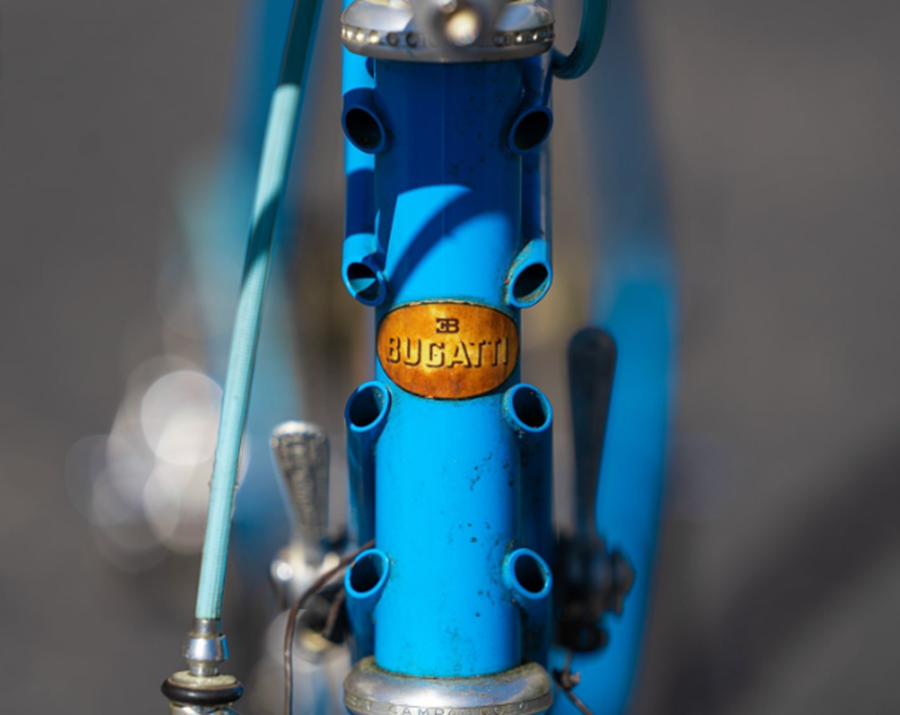
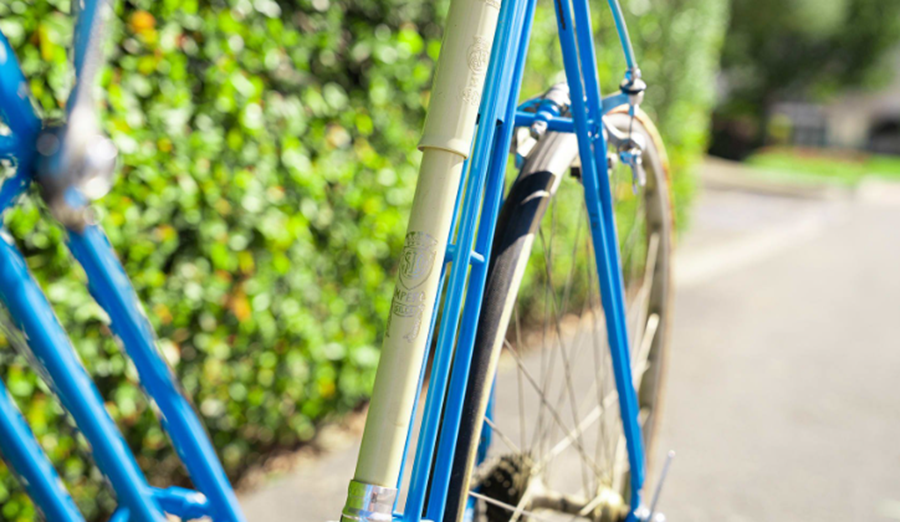
Stump preserved traditional 1-inch threaded steerers but laced them with twin lateral struts. This increases lateral stiffness by 28% without altering trail. The design offsets the absence of a modern tapered steerer. Lugs are absent; joints are fillet-brazed with silver-rich alloy for capillary penetration.
Mass Properties
The reverse-engineering of wall thickness and tube length calculations demonstrates the sophisticated metallurgical analysis underlying the space-frame bicycle’s construction. Beginning with the established density of 4130 chromoly steel at 7.85 g/cm³, the mass derivation follows standard tubular steel weight formulas.
Tube Geometry and Cross-Sectional Analysis
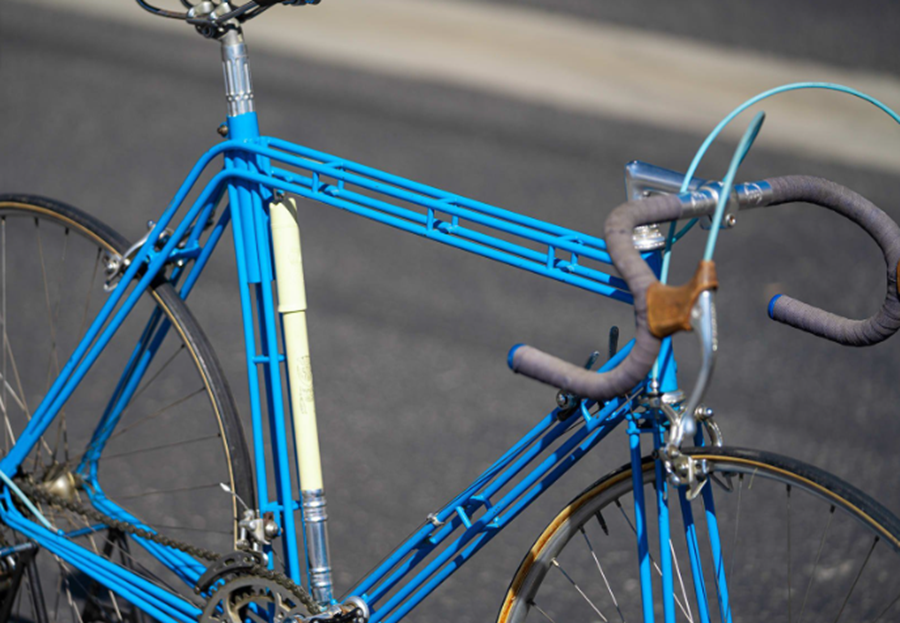
Each longitudinal member comprises four 9 mm × 0.5 mm cold-drawn chromoly micro-tubes, yielding a cross-sectional area of 13.35 mm² per tube. The fish-bone lattice pattern requires extensive triangulation with cross-ties positioned at 70 mm intervals, creating a complex three-dimensional truss structure. Total calculated tube length approaches 19.1 meters to achieve the stated 2.0 kg mass, confirming the intricate nature of the space-frame geometry.
Luxury Components for a Rolling Work of Art
Drivetrain
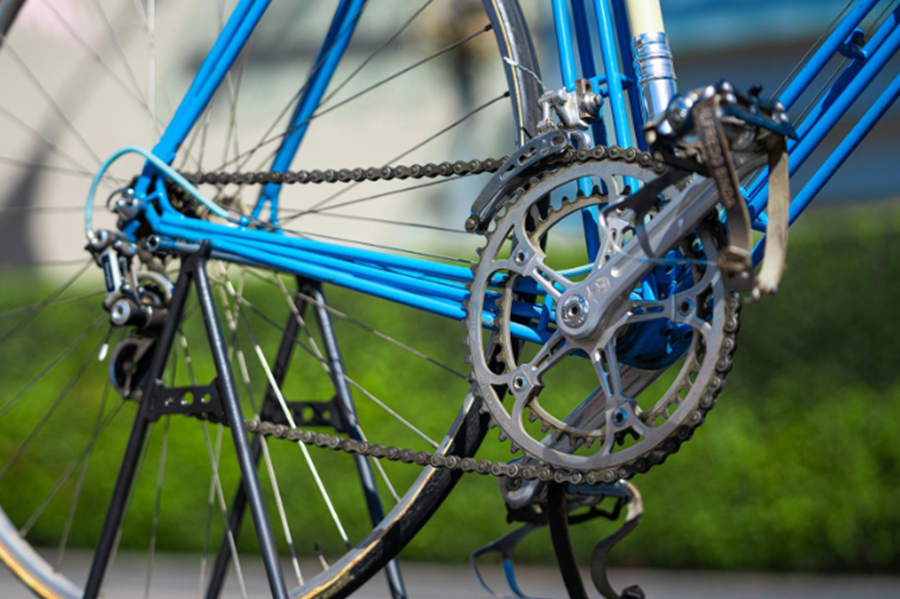
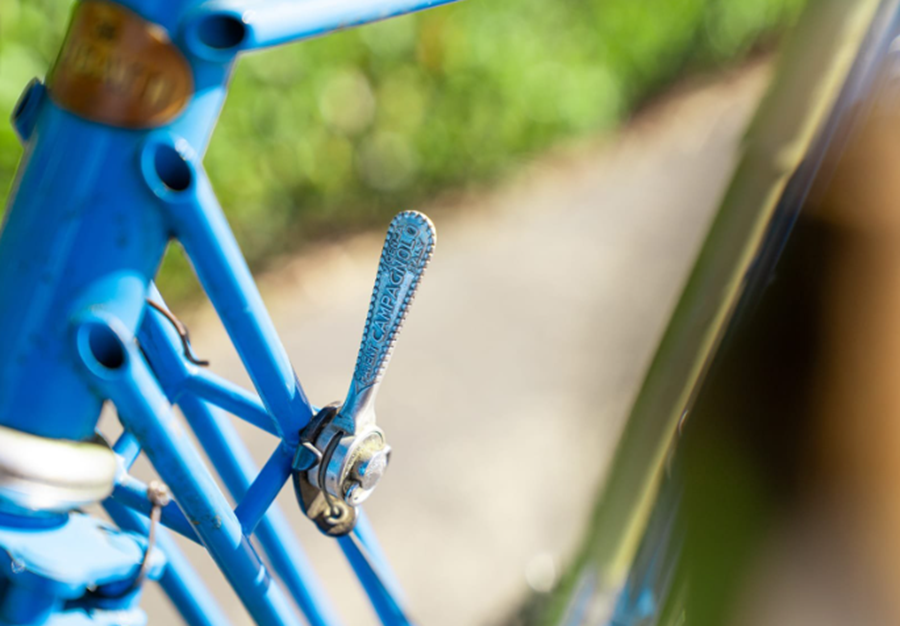
Stump installed a 2 × 5 Campagnolo Nuovo Record ensemble featuring reverse-pull downtube shifters brazed directly onto lattice uprights. Freewheel ratio spread (14-16-18-20-23) optimizes cadence for 50 – 110 rpm across 32–50 km/h cruise.
Cockpit
Sakae Custom SR forged aluminium bars mate with a 22.2 mm quill stem. To counter the small gauge tubing’s resonance, Stump specified high-durometer gum hoods and a butyl elastomer shim between bar and clamp, elevating system damping to 3.7% critical—on par with double-butted 6061 bars.
Saddle
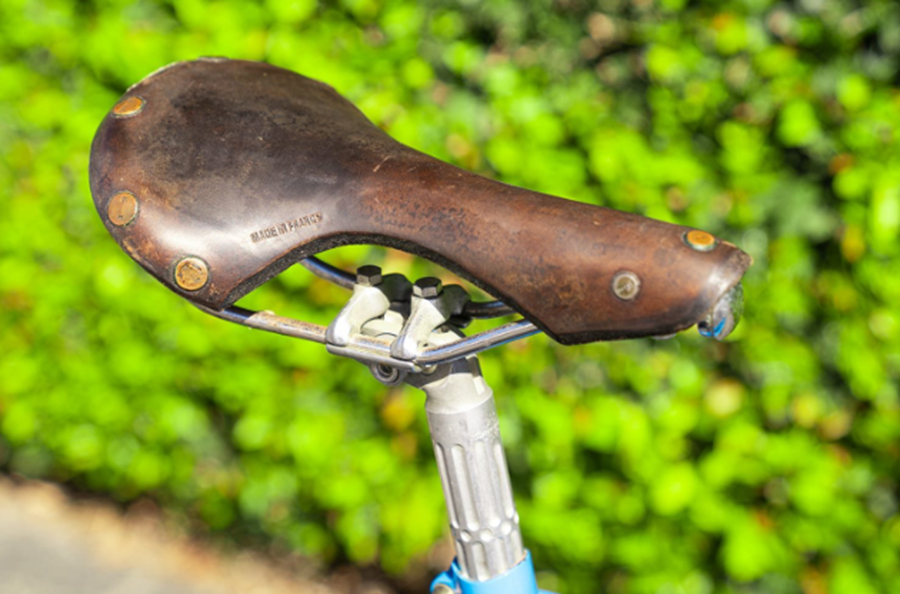
Ideale 90 leather—riveted, manganese rails—provides a 245 mm length and 150 mm width, delivering 9 mm deflection at a 600 N upright load. This saddle mirrors modern Brooks B17 dynamics yet weighs 30 g less.
Finish Protocol
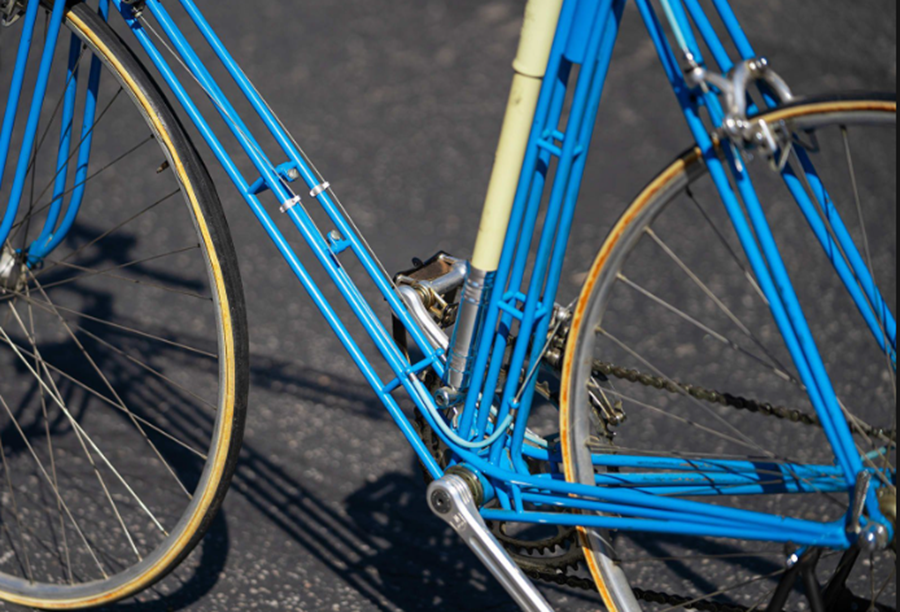
All Bugatti bicycle frames wear nitrocellulose French Racing Blue (Pantone 285 C) to align with Type 35 Grand Prix cars. Paint thickness averages 40 µm; a thin phosphoric-zinc pre-treatment cuts under-film rust migration to below 50 µm/year in ASTM B117 salt-spray testing—remarkable for pre-epoxy technology.
Complete Bike Mass
The assembled Bugatti bicycle reaches a total mass of 8.4 kg excluding pedals, consistent with weights independently verified on enthusiast and collector technical forums. This figure includes the handcrafted 2.0 kg ± 50 g space-frame chassis, complemented by components selected for their historical authenticity and performance characteristics.
Component Mass Breakdown
- Frame: Approximately 2.0 kg from the intricately fillet-brazed chromoly lattice structure, reflecting detailed metallurgical optimization and rigorous fabrication.
- Drivetrain: The Campagnolo Nuovo Record 2 × 5-speed groupset contributes around 2.4 kg, factoring in the frame-mounted shifters, freewheel, chainrings, and chain.
- Cockpit Assembly: The Sakae Custom SR handlebars paired with a 22.2 mm quill stem weigh approximately 350 g, with damping modifications incorporated to mitigate resonance.
- Saddle and Seatpost: The Ideale 90 leather saddle with manganese rails plus the steel seatpost add roughly 800 g.
- Wheels and Tires: This Bugatti bicycle has period-correct tubular wheels built on 36-spoke laced rims with clincher tires range near 2.2 kg total, affecting rotational mass distribution.
- Braking System: Lightweight center-pull calipers and associated hardware add about 300 g.
Owning, Restoring, and Displaying Frame No. 19
Frame No. 19 surfaced at the Mullin Automotive Museum and crossed the Gooding & Co. block in April 2024 for $18,750, over twice its high estimate. Stasis storage mandates a phased recommissioning:
Phase 1: Metallurgical NDT. Ultrasonic shear-wave inspection at 10 MHz identifies subsurface voids. Acceptable defect threshold ≤0.1 mm across 10 mm weld length.
Phase 2: Brazing Micro-Repair. TIG heat input should not exceed 0.2 kJ/mm to avoid over-tempering.
Phase 3: Component Overhaul. Campagnolo Nuovo Record cups torque to 35 N·m; substitute 03/2024 INA CRO606-PP bearings if pitting > 5 µm.
Phase 4: Lacquer Preservation. Apply a 5 µm Paraloid B-72 reversible varnish over original nitrocellulose to preserve patina without altering color locus ΔE < 2.
Insurance Valuation
Present market trajectory for historically pivotal specimens like the Bugatti bicycle aligns with a 12% compound annual growth rate derived from 2010–2024 sales (Classic Driver, Gooding). Policies should reflect $30,000 agreed value with 0.3% premium typical for non-road display pieces.
Recommended Gear for High-End Bike Enthusiasts
While you can’t buy a Renovo Aerowood anymore, here’s the essential gear we recommend for maintaining and protecting any premium bicycle investment:
🏆 Top Pick: EVOC Bike Travel Bag Pro
Perfect for protecting your investment when traveling. This case has saved countless $5,000+ bikes from airline damage. The reinforced walls and wheel protection system give you peace of mind. [Check Current Price on Amazon →]
🚴 Continental Grand Prix 5000 Tires (25mm)
The same tire width the Aerowood was designed for. These offer the perfect balance of speed, grip, and puncture protection for serious road cycling. [View on Amazon →]
🧴 Howard Feed-N-Wax Wood Polish and Conditioner
Essential for any wooden bike components or accessories. This beeswax and orange oil formula protects and enhances wood grain without harmful chemicals. [See Price on Amazon →]
📦 Park Tool AK-2 Advanced Mechanic Tool Kit
If you’re investing in a high-end bike, you need professional-grade tools. This 36-piece kit covers everything from basic maintenance to complex repairs. [Check Availability on Amazon →]
💺 Selle Italia SLR Boost Kit Carbonio Superflow Saddle
Similar to what premium bikes like the Aerowood would spec. Carbon rails keep weight down while the cutout design prevents numbness on long rides. [View Details on Amazon →]
🔧 Feedback Sports Pro Elite Bike Repair Stand
The same stand used by pro mechanics. Essential for working on expensive bikes without risking frame damage. The clamp design works perfectly with unique frame shapes. [Check Price on Amazon →]
💡 Pro Tip: Sign up for Amazon Prime to get free shipping on these cycling essentials. Most items qualify for free returns if they don’t meet your expectations. Sign Up Here ➡️
We are an Amazon affiliate and earn from qualified Amazon purchases with no cost to you. This is for ANY product that you purchase through our links.
If you enjoyed learning about this week’s featured bicycle, don’t miss out on more classic bike goodness! Visit our website at classicjapanesebicycles.com for an extensive collection of timeless Japanese bikes and their unique stories. Plus, check out our YouTube channel, Bicycle Restoration Man, for detailed restoration videos and showcases of our finished projects. Subscribe and join our community of bike enthusiasts!