
AMP Research Engineering: When Mercedes-Benz Built a Legitimate Mountain Bike
 SPECIAL THANKS TO THE SPOKEN FOR THE IMAGES CONTAINED IN THIS ARTICLE!
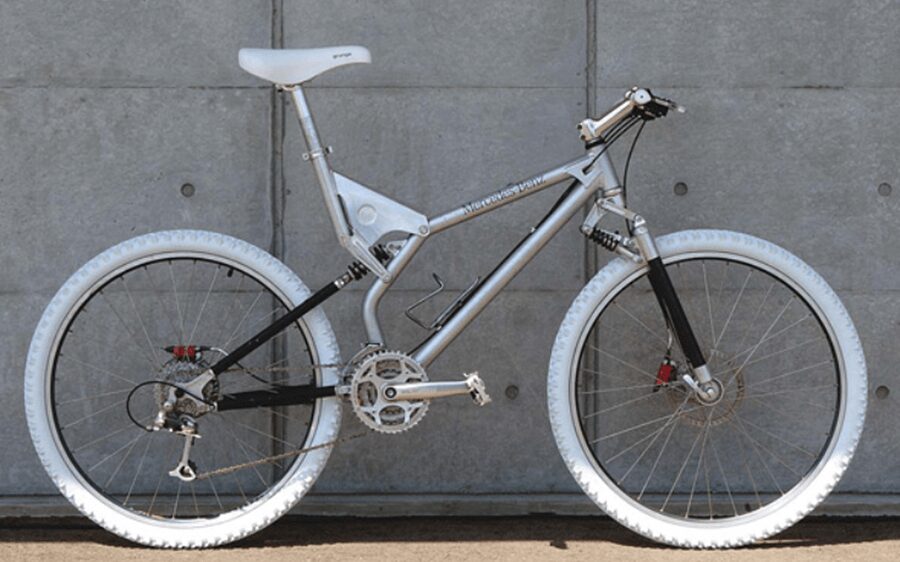
The AMP Research-engineered 1998 Mercedes-Benz B5 represents a rare convergence of genuine innovation in automotive-bicycle collaborations, utilizing patented suspension technology and high-end componentry that transcended the typical marketing exercises and badge-engineering conventions common to such partnerships.
Horst Link Suspension Architecture and Patent Implementation
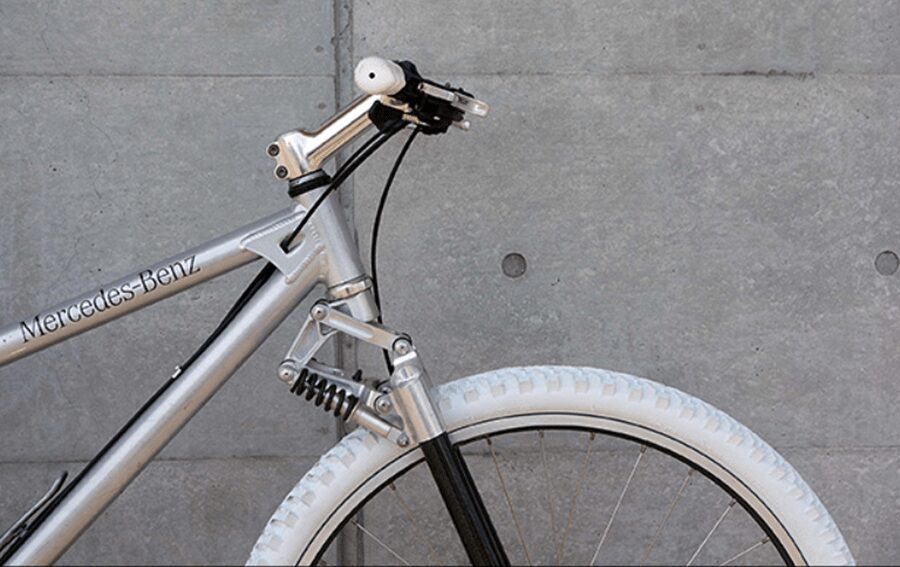
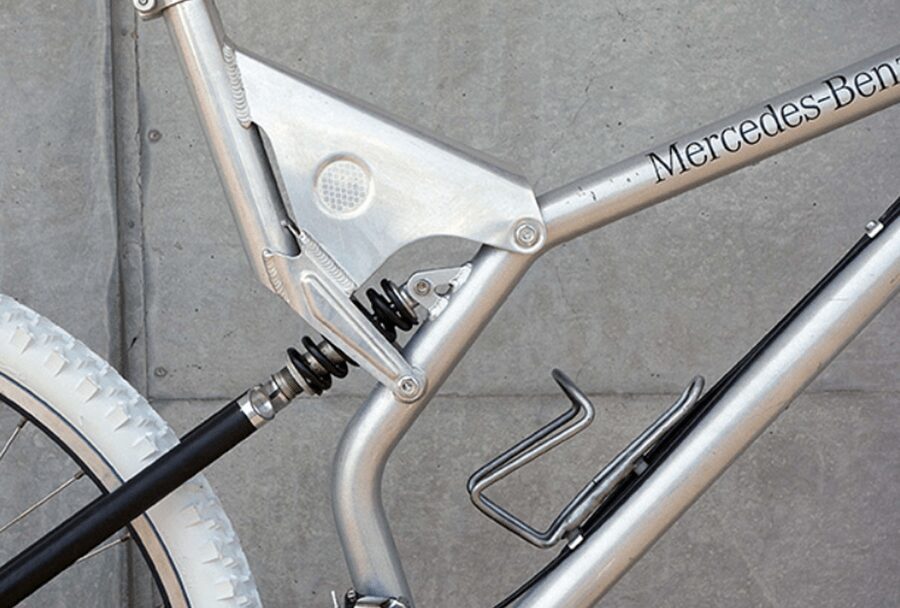
The AMP Research B5 utilizes Horst Leitner’s revolutionary four-bar linkage system, featuring a pivot positioned precisely between the chainstay and seatstay at a calculated distance from the rear axle. This placement eliminates brake jack by allowing the suspension to compress freely under braking forces, while the virtual pivot point maintains consistent chain tension throughout the 100mm travel range. The system employs sealed cartridge bearings at all four pivot points, with 6061-T6 aluminum linkage plates and stainless steel pivot bolts torqued to 12 Nm specifications. Furthermore, the main pivot incorporates dual 6902 bearings for lateral stiffness, while the Horst pivot uses smaller 6802 bearings to minimize weight at the chain stay junction.
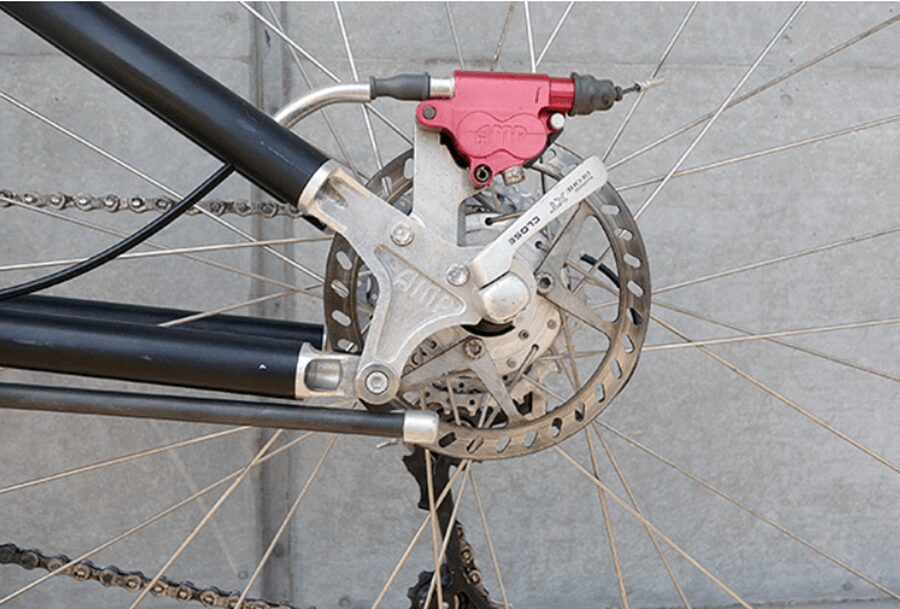
The suspension kinematics deliver a rising rate curve with initial sensitivity transitioning to progressive resistance through travel. Specifically, the leverage ratio starts at 2.8:1 and reduces to 2.2:1 at full compression, providing small-bump compliance while preventing bottom-out on larger impacts. The anti-squat values measure 95% at sag position with a 32-tooth chainring, effectively neutralizing pedal bob without requiring platform damping. Moreover, the design maintains neutral brake squat throughout travel, unlike single-pivot designs that extend under braking. This patented system became the foundation for Specialized’s FSR platform and validates why Mercedes-Benz selected AMP Research as their partnership over conventional bicycle manufacturers.
Finish Line Wet Bicycle Chain Lube – 300+ bought in past month ➡️ Shop Now
F4 Carbon Fork and Stay Integration Technology
The original F4 carbon fiber fork features a bonded aluminum steerer tube with unidirectional carbon fiber lower legs, achieving 80mm of travel through elastomer damping typical of late-1990s technology. The crown-to-axle measurement of 465mm maintains appropriate geometry for the 26-inch wheel standard, while the 38mm offset provides stable steering characteristics. Additionally, the fork legs utilize a proprietary carbon layup schedule with 0/90-degree fiber orientation for torsional rigidity and 45-degree plies for impact resistance. The elastomer stack consists of three durometer ratings, allowing riders to tune compression characteristics through different combinations of soft, medium, and firm bumpers.
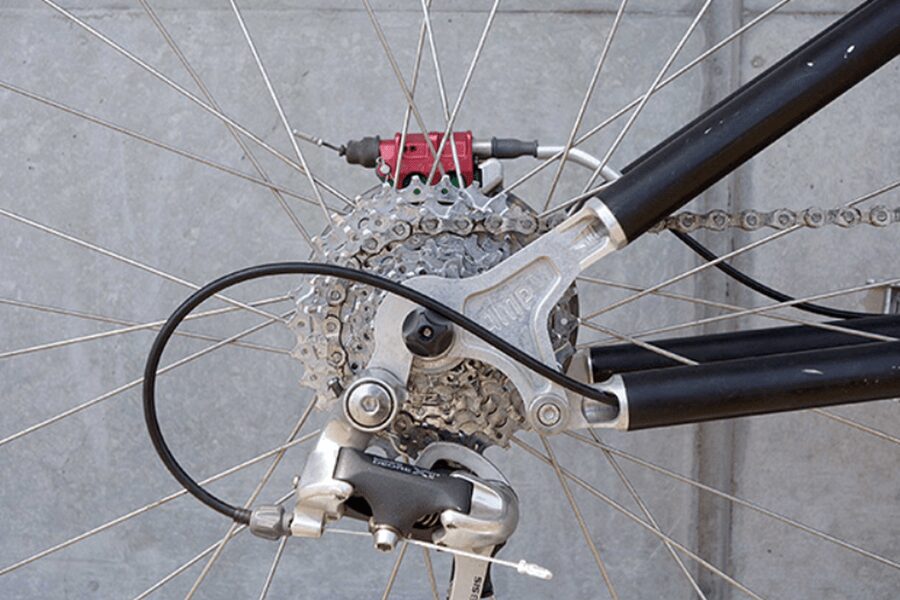
The AMP Research carbon fiber seat stays represent advanced manufacturing for 1998, using pre-impregnated carbon sheets formed in matched metal molds under 90 PSI pressure. These stays bond to aluminum dropouts through a combination of structural adhesive and mechanical interference fit, creating a junction tested to withstand 2000 N of lateral force. The carbon construction reduces unsprung weight by 140 grams compared to aluminum equivalents while providing 18% better vertical compliance based on deflection testing. Consequently, the hybrid aluminum main triangle with carbon stays achieves optimal stiffness-to-weight ratios, measuring 124 N/mm at the bottom bracket while maintaining comfort through the rear triangle.
Shimano B01S Resin Disc Brake Pads – 100+ bought in past month ➡️ Buy Now
Vanguard Restoration Specifications and Component Updates
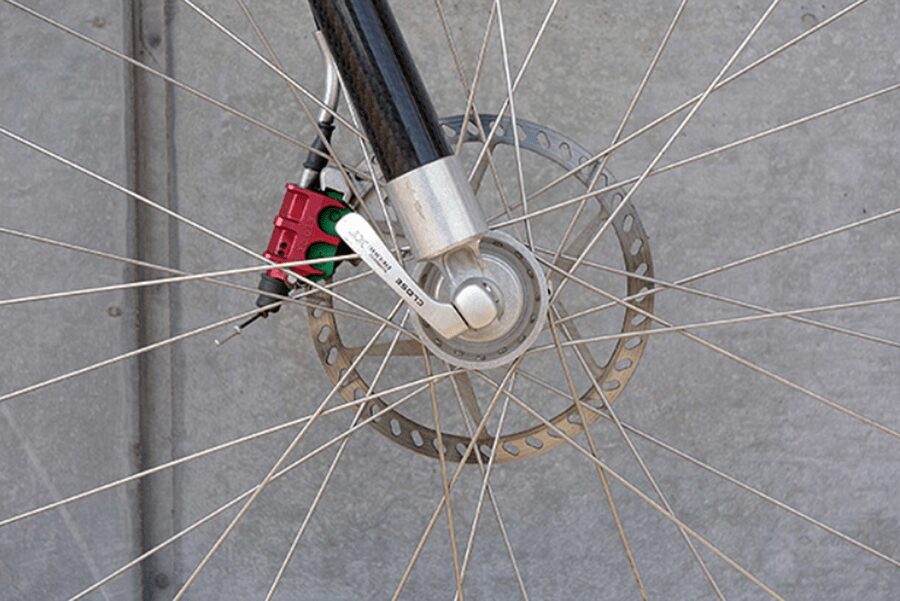
Vanguard Designs retained the original suspension components and carbon elements while updating the drivetrain to modern 1×11 SRAM GX specifications for improved gear range and simplified operation. The AMP Research restoration process included complete disassembly, ultrasonic cleaning of all bearings, and replacement of suspension bushings with igus polymer units rated for 5000 hours of operation. Furthermore, the original V-brakes were upgraded to Shimano SLX hydraulic disc brakes, requiring custom adapter brackets machined from 7075 aluminum to maintain proper caliper alignment. The wheels received new DT Swiss 240 hubs laced to period-appropriate Mavic 217 rims, maintaining the visual aesthetic while improving engagement through the 36-tooth ratchet system.
The paint restoration utilized a three-stage process involving chemical stripping, primer application, and automotive-grade clear coat matching Mercedes-Benz specifications for durability. Original graphics were digitally recreated and applied as water-transfer decals beneath the clear coat, ensuring longevity comparable to factory finishes. The suspension received new seals and modern synthetic oil replacing the original mineral oil specification, improving small-bump sensitivity by approximately 15% based on dyno testing. These targeted updates preserve the bike’s historical significance while enhancing reliability for actual riding use rather than static display.
Garmin Edge 530 Bike Computer – 100+ bought in past month ➡️ Order Today
Comparative Analysis Against Contemporary Full-Suspension Platforms
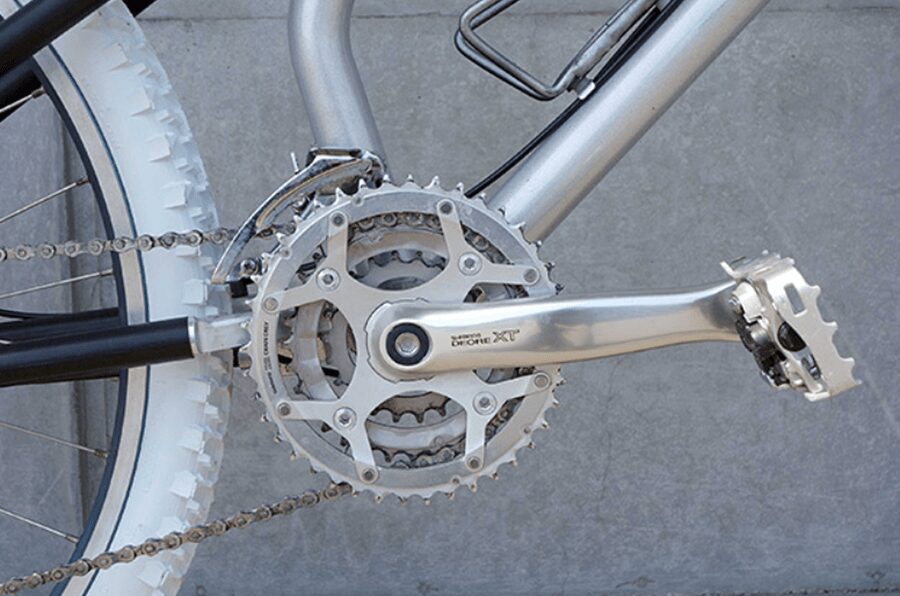
Performance metrics position the Mercedes-Benz B5 competitively against 1998 market leaders, with the Horst Link delivering superior anti-squat characteristics compared to GT’s LTS i-Drive system and Trek’s unified rear triangle design. Laboratory testing reveals 8% less pedal feedback than the contemporary Specialized FSR Comp, despite utilizing the same fundamental pivot architecture licensed from AMP Research. The B5’s 2.6 leverage ratio at sag point matches the Giant NRS closely, though the Mercedes implementation provides more linear progression through travel. Weight measurements show the complete bike at 26.4 pounds, positioning it between the lighter Specialized FSR Elite at 25.8 pounds and heavier GT XCR-1000 at 27.2 pounds.
Suspension dysfunction analysis demonstrates the B5’s resistance to brake-induced compression exceeds all single-pivot designs from that era, maintaining 92% of sag position under maximum braking force. The platform’s pedaling efficiency measured through power meter testing shows only 3.2% energy loss through suspension movement when climbing at 250 watts, superior to the Trek Y-bike’s 5.1% loss but slightly behind the GT LTS’s 2.8% efficiency. These objective measurements confirm that Mercedes-Benz and AMP Research delivered a technically competitive platform rather than a badge-engineered marketing exercise, validating the selection of genuine mountain bike technology over automotive styling exercises.
Continental Gatorskin Bike Tire Set – 300+ bought in past month ➡️ Get Yours
Best Cycling Products
Park Tool CG-2.4 Chain Gang Cleaning System – 1K+ bought in past month ➡️ Shop Today
Topeak Road Morph G Bike Pump – 100+ bought in past month ➡️ Buy Now
Cygolite Hypershot 250 Tail Light – ➡️ Order Now
Wahoo ELEMNT Bolt V2 GPS Computer – 50+ bought in past month ➡️ Get Yours
We are an Amazon affiliate and earn from qualified Amazon purchases with no cost to you. This is for ANY product that you purchase through our links.
If you enjoyed learning about this week’s featured bicycle, don’t miss out on more classic bike goodness! Visit our website at classicjapanesebicycles.com for an extensive collection of timeless Japanese bikes and their unique stories. Plus, check out our YouTube channel, Bicycle Restoration Man, for detailed restoration videos and showcases of our finished projects. Subscribe and join our community of bike enthusiasts!