

Contents
- 1 Cycling Training Plan: How Many Hours Per Week Do I Need?
- 1.1 How Many Hours Per Week Should You Train for Cycling?
- 1.2 Weekly Cycling Training Schedule: The 4-6 Hour Framework
- 1.3 Cycling Training Plan for Beginners: Building Your Base Hours
- 1.4 Intermediate to Advanced Cycling Training: Optimizing Performance Hours
- 1.5 How to Structure Your Cycling Training Plan for Maximum Results
Cycling Training Plan: How Many Hours Per Week Do I Need?
The optimal cycling training plan depends on various factors including your current fitness level, available time, and specific objectives. Whether you’re a beginner cyclist or looking to optimize your existing routine, determining the right amount of weekly training hours is crucial for achieving your fitness goals. Research shows that most cyclists can achieve significant improvements with a structured approach that balances training volume, intensity, and recovery.
How Many Hours Per Week Should You Train for Cycling?

The ideal number of cycling training hours varies significantly based on your experience level and goals. According to cycling experts, beginners should start with 3-5 hours per week spread across three sessions. This foundational approach allows new cyclists to build cardiovascular fitness without overwhelming their bodies.
For recreational cyclists focused on general fitness, the 4-6 hour weekly framework represents the sweet spot for sustainable progress. This duration aligns with World Health Organization recommendations of 150-300 minutes of moderate-intensity exercise weekly. Research indicates that this volume provides substantial cardiovascular benefits while remaining manageable for most people’s schedules.
Serious recreational riders who want to participate in cycling events typically benefit from 6-10 hours per week. This increased volume allows for more structured cycling training zones work and longer endurance rides. However, beyond 10 hours weekly, the law of diminishing returns begins to apply, where 90% more effort yields only 10% additional fitness gains.
Professional and competitive cyclists often train 15-30+ hours per week, but this level requires significant lifestyle adjustments and recovery protocols. For most amateur cyclists, this volume is unnecessary and potentially counterproductive.
The key is consistency rather than excessive volume. A well-designed cycling training plan with moderate hours performed regularly will yield better results than sporadic high-volume weeks followed by periods of inactivity.
Weekly Cycling Training Schedule: The 4-6 Hour Framework


Creating an effective cycling training schedule requires strategic distribution of your weekly hours across different types of rides. The 4-6 hour framework provides an optimal balance between training stimulus and recovery, making it sustainable for long-term progress.
Monday: Rest or Active Recovery (0-30 minutes)
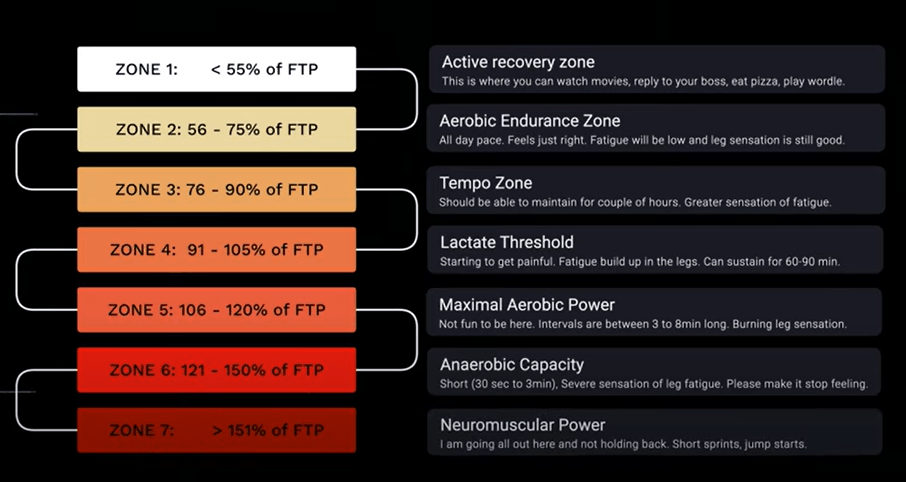
Start your week with complete rest or gentle active recovery. If you choose to ride, keep it in Zone 1 (less than 55% of FTP) at a conversational pace. This helps promote blood flow and prepares your body for the week ahead.
Tuesday: Interval Training (60-90 minutes)
This is your primary high-intensity day. After a proper warm-up, incorporate cycling intervals such as 5-10 sprints, short time trials, or 6 intervals of 1-2 minutes at 90% maximum heart rate. These sessions target your anaerobic capacity and improve overall cycling performance.
Wednesday: Endurance Ride (90-120 minutes)
Focus on building your aerobic base with a steady endurance ride. Keep your heart rate below 85% maximum, emphasizing cycling training zones 2-3. This develops your body’s ability to utilize fat for fuel and improves cardiovascular efficiency.
Thursday: Recovery or Cross-Training (30-60 minutes)
Include either a gentle recovery ride or complementary activities like strength training. Cycling fitness benefits from cross-training that addresses muscle imbalances and enhances overall athleticism.
Friday: Rest or Easy Spin (0-45 minutes)
Prepare for your weekend rides with complete rest or an easy spin focusing on smooth pedaling technique.
Saturday: Long Ride (2-3 hours)
Your weekly long ride builds cycling endurance and mental toughness. Start conservatively and gradually extend these rides over time. This session forms the cornerstone of your weekly cycling training volume.
Sunday: Recovery Ride or Rest (30-60 minutes)
Complete your week with an easy recovery ride or rest day, depending on how you feel after Saturday’s effort.
This structure provides approximately 4-6 hours of riding time while ensuring adequate recovery between intense sessions. The framework remains flexible enough to accommodate schedule changes while maintaining training consistency.
Cycling Training Plan for Beginners: Building Your Base Hours

Starting a cycling training plan as a beginner requires patience and progressive development. The foundation phase focuses on building basic fitness, developing proper technique, and establishing consistent training habits without overwhelming your body’s adaptation capacity.
Weeks 1-2: Foundation Building (2-3 hours total)
Begin with three 30-minute rides per week, focusing on comfortable conversation pace. These initial sessions prioritize building the habit of regular cycling while allowing your body to adapt to the new movement patterns. Choose flat, safe routes away from heavy traffic to build confidence.
Weeks 3-4: Time Extension (3-4 hours total)
Gradually increase your weekday rides to 45-60 minutes while extending your weekend ride to 90 minutes. This progression follows the principle of increasing training volume by no more than 10% per week, reducing injury risk while promoting steady adaptation.
Weeks 5-6: Frequency Adjustment (3-4 hours total)
Some weeks may require reducing frequency to allow for longer individual rides. Focus on developing cycling endurance with one longer ride per week while maintaining two shorter sessions. This teaches your body to sustain effort over extended periods.
Weeks 7-8: Intensity Introduction (4-5 hours total)
Begin incorporating gentle intensity work into your cycling workout plan. Add short 30-second efforts during your rides, recovering fully between each one. This introduces your body to higher-intensity work while maintaining an aerobic base.
Beginner Training Zones
Understanding basic cycling training zones helps optimize your beginner program:
Zone 1 (Recovery): Very easy, conversational pace
Zone 2 (Endurance): Comfortable, sustainable effort where you can speak in full sentences
Zone 3 (Tempo): Moderate effort where conversation becomes more difficult
Focus primarily on Zones 1 and 2 during your first eight weeks, with minimal Zone 3 work. This approach builds a strong aerobic foundation essential for all future cycling training program progression.
Nutrition and Recovery
Beginner cyclists should prioritize proper hydration and post-ride nutrition. Simple carbohydrate and protein intake within 30 minutes post-ride aids recovery and adaptation. Adequate sleep (7-9 hours nightly) supports the physiological adaptations occurring from your new training stimulus.
The beginner phase establishes patterns that will serve you throughout your cycling journey. Consistency trumps intensity at this stage, so focus on showing up regularly rather than pushing hard in every session.
Intermediate to Advanced Cycling Training: Optimizing Performance Hours

As cyclists progress beyond the beginner stage, their cycling training plan must evolve to address more sophisticated physiological adaptations. Intermediate riders (6-12 months of consistent training) and advanced cyclists (1+ years) require structured periodization and targeted training zones to continue improving performance.
Advanced Training Zone Utilization
Intermediate and advanced cyclists should incorporate all cycling training zones strategically:
Zone 4 (Sweet Spot): 76-90% of FTP, combining benefits of tempo and threshold training
Zone 5 (Threshold): 91-105% of FTP, improving lactate clearance and sustainable power
Zone 6 (VO2 Max): 106-120% of FTP, developing maximal oxygen uptake through 4-8 minute intervals
Zone 7 (Anaerobic): >120% of FTP, enhancing neuromuscular power and sprint capacity
Periodization Principles
Advanced cycling training programs follow periodization principles, dividing the year into distinct phases:
Base Phase (3-4 months): Focus on aerobic development through Zone 2 work
Build Phase (2-3 months): Introduce race-specific intensities and cycling intervals
Peak Phase (4-6 weeks): Sharp, high-intensity work for peak performance
Recovery Phase (2-4 weeks): Active recovery and preparation for next cycle
Weekly Structure for Advanced Training (8-12 hours)
Advanced cyclists typically train 5-6 days per week with greater variety:
Two high-intensity sessions featuring targeted intervals
One long endurance ride (3-5 hours) for aerobic development
Two moderate sessions combining tempo and sweet spot work
One recovery day or cross-training session
Specialized Training Techniques
Advanced cycling performance requires specific training methods:
Polarized Training: 80% easy, 20% hard distribution maximizes adaptation while minimizing fatigue
Block Periodization: Concentrated training blocks focusing on specific energy systems
Power-Based Training: Using FTP testing and power meters for precise intensity control
Cross-Training Integration
Advanced cyclists benefit from bike training supplementation with strength training, which research shows improves sprint performance, time to exhaustion, and injury prevention. A typical strength program includes squats, deadlifts, and cycling-specific exercises performed 2-3 times per week.
Recovery and Monitoring
Advanced training requires sophisticated recovery protocols including sleep optimization, nutrition timing, and stress management. Heart rate variability, resting heart rate, and subjective wellness scores help monitor adaptation and prevent overtraining.
The transition from intermediate to advanced cycling requires commitment to structured training principles while maintaining the flexibility to adapt based on individual response and life circumstances.
How to Structure Your Cycling Training Plan for Maximum Results

Creating an effective cycling training plan requires careful consideration of multiple factors including available time, fitness goals, and individual recovery capacity. The most successful plans balance progressive overload with adequate recovery while maintaining long-term sustainability.
Annual Planning Approach
Start by identifying your primary cycling goals for the year. Whether targeting specific events, improving general fitness, or achieving performance benchmarks, your cycling training program should work backward from these objectives. Create an annual calendar marking important dates and counting backward to establish training phases.
Training Plan Components
A comprehensive cycling workout plan integrates several key elements:
Base Training: 60-70% of total training time in aerobic zones
Intensity Work: 20-30% focused on specific energy systems
Recovery: 10-20% dedicated to active recovery and complete rest
Strength Training: 2-3 sessions weekly supporting cycling fitness
Progressive Overload Principles
Effective cycling training schedules follow progressive overload through:
Volume Progression: Gradually increasing weekly hours by 10-20%
Intensity Progression: Systematically advancing from base to race-specific efforts
Complexity Progression: Evolving from simple to sophisticated training methods
Periodization Models
Choose a periodization model that fits your schedule and goals:
Linear Periodization: Traditional base-build-peak progression
Block Periodization: Concentrated training blocks with specific focuses
Undulating Periodization: Varied training stimuli within shorter cycles
Recovery Integration
Successful weekly cycling training plans prioritize recovery as much as training:
Active Recovery: Easy rides promoting blood flow and adaptation
Passive Recovery: Complete rest allowing physiological repair
Sleep: 7-9 hours nightly for optimal adaptation and performance
Nutrition: Proper fueling before, during, and after rides
Training Load Management
Monitor your training load through:
Training Stress Score (TSS): Quantifies training impact
Chronic Training Load (CTL): Measures fitness development
Acute Training Load (ATL): Tracks recent training stress
Training Stress Balance (TSB): Indicates readiness for hard training
Flexibility and Adaptation
The best cycling training plans remain flexible enough to accommodate life’s unpredictability. Build buffer days into your schedule and maintain alternative indoor training options for weather or time constraints.
Long-term Development
View your plan as part of a multi-year development process. Focus on building consistently rather than seeking rapid gains that may lead to burnout or injury. The most successful cyclists develop their fitness over years, not weeks.
Remember that the perfect plan is the one you can execute consistently. Start with a realistic assessment of your available time and commitment level, then build a cycling training program that challenges you appropriately while remaining sustainable for your lifestyle.
 |  |
We are an Amazon affiliate and earn from qualified Amazon purchases with no cost to you. This is for ANY product that you purchase through our links.
If you enjoyed learning about this week’s featured bicycle, don’t miss out on more classic bike goodness! Visit our website at classicjapanesebicycles.com for an extensive collection of timeless Japanese bikes and their unique stories. Plus, check out our YouTube channel, Bicycle Restoration Man, for detailed restoration videos and showcases of our finished projects. Subscribe and join our community of bike enthusiasts!